
Regeneration
Of orthopaedic tissues

Many musculoskeletal tissues, including articular cartilage, bone and meniscus, have limited capacity to heal after injury. Damage to these tissues can lead to pain, loss of mobility and progressive joint degeneration. We develop regenerative strategies that aim to restore not only tissue composition, but also native architecture, mechanical function and long-term durability.

Articular cartilage is a central focus. Current treatments often fill defects but do not fully restore the collagen organisation, zonal structure and load-bearing properties of healthy cartilage. Our research therefore combines cells, biomaterials, microtissues and fibre-reinforced architectures to guide the formation of functional cartilage-like tissue. Particular attention is given to matrix organisation, tissue integration and the development of constructs that can withstand physiological loading.
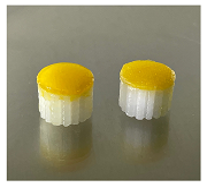
We also develop osteochondral and meniscus constructs that reflect the complexity of native joint tissues. This includes implants with distinct cartilage and bone regions, scaffolds for bone regeneration, and engineered tissues with spatially controlled properties. By combining biofabrication with regenerative biology, we aim to create constructs that better match the structural and functional requirements of injured or diseased joints.

Alongside implant development, we create advanced in vitro models of joint disease and repair. Cartilage organoids, osteochondral models and organ-on-chip systems are used to study degeneration, inflammation and regeneration, and to evaluate new therapeutic strategies in more human-relevant systems. These models help bridge the gap between fundamental research, preclinical testing and eventual clinical translation.