

LEARNING FROM NATURE
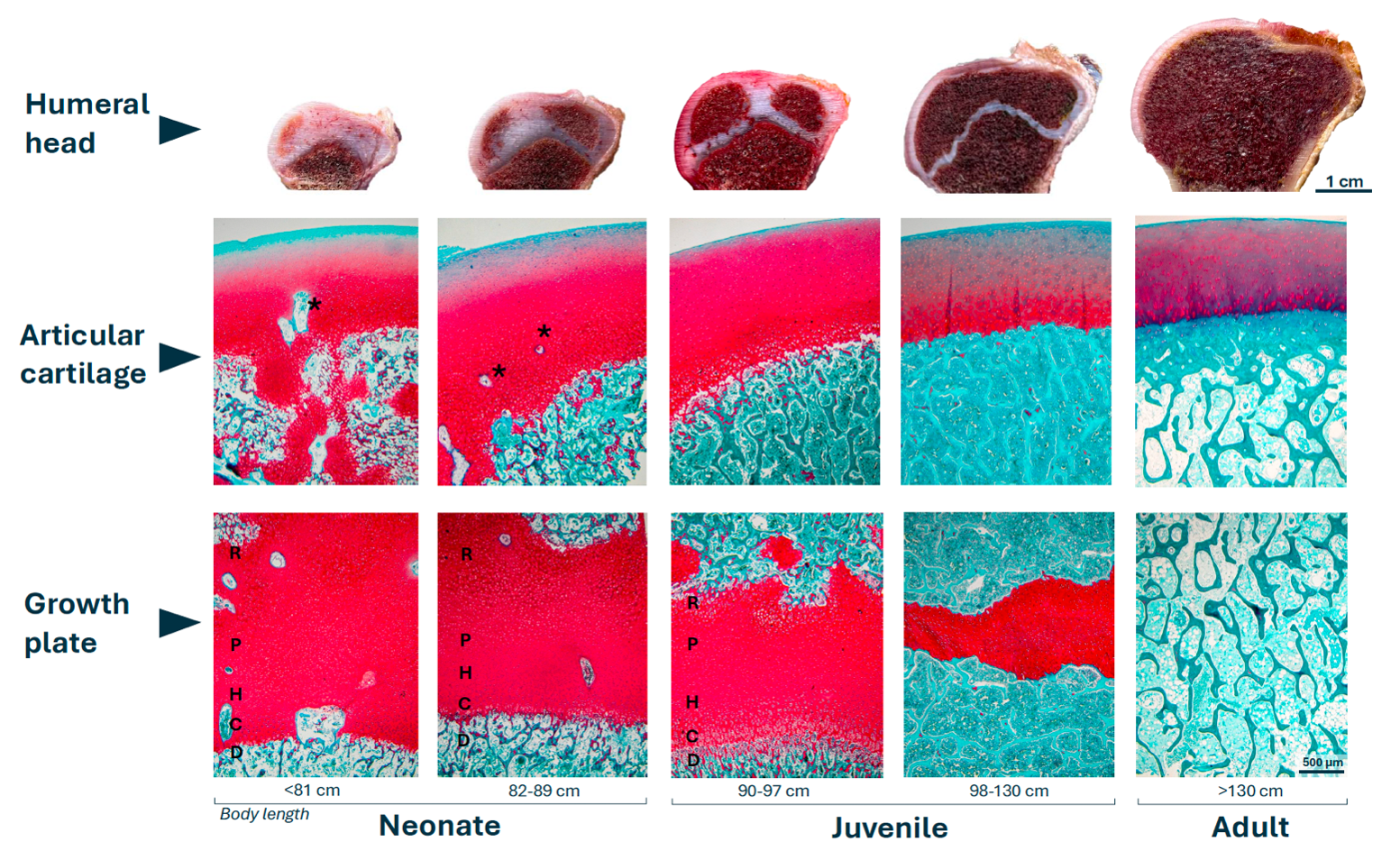
Nature offers a rich source of design principles for regenerative medicine. We study how joint tissues are organised across different mammalian species, from small animals to large terrestrial and aquatic mammals, to understand how cartilage and bone adapt to body size, movement and mechanical loading. These comparisons reveal how tissue structure is shaped by function and environment.
This work is supported by a unique osteochondral tissue biobank. By comparing cartilage thickness, collagen organisation, subchondral bone architecture, mineralisation and osteochondral interface properties across species, we gain insight into how structure and function are connected in healthy joints. These studies also help identify which tissue features are conserved across mammals and which are adapted to specific loading conditions.

The biological insights gained from this work help guide the design of engineered tissues. Understanding how native cartilage and bone achieve durability, integration and load-bearing capacity informs the development of biomimetic scaffolds, fibre-reinforced hydrogels, osteochondral constructs and advanced in vitro models. In this way, comparative biology provides inspiration for new regenerative strategies.

A central theme is the osteochondral unit: the functional connection between articular cartilage and underlying bone. Studying this unit as an integrated system helps us better understand joint health, osteoarthritis and the requirements for durable tissue repair. It also supports the development of implants and models that more closely reflect the complexity of the native joint.